AI x Design Bi-Weekly #002
The Week the Agents Stopped Asking Permission

I almost wrote the obvious version of this week. Adobe shipped agents into Photoshop, Figma’s design agent learned to search the web, Cursor turned on always-on automations. Four logos, four feature drops, tidy newsletter. Done by lunch.
But that framing misses what actually happened. This wasn’t a week of features. It was a week where the relationship changed. For two years the pitch was “AI as copilot”, it sits beside you, you stay in the chair. This week the copilot quietly got up, walked into the rest of the office, and started doing the work when you’re not looking.
The through-line isn’t capability. It’s autonomy, and who’s accountable when it goes wrong.
Cursor 3.8: the agent that works while you sleep
Cursor’s 3.8 release is the one that made me sit up, and not because it’s flashy. It’s the opposite of flashy. Cursor Automations lets you spin up always-on agents triggered by a GitHub event, a Slack message, even a single emoji reaction. React with a designated emoji and an agent kicks off, does the task, opens a PR, and can now use its own computer to produce a demo of the work it did.
Read that again. The trigger for autonomous software work is now an emoji. No prompt, no chair, no human in the moment of action.
Here’s my honest take. This is the most important thing that shipped this week and the least talked about, because it doesn’t demo well. There’s no wow moment, just a quiet structural shift from “AI helps me code” to “AI codes when something happens.” For anyone leading a team, the question stops being “how good is the model” and becomes “what are we comfortable letting it do unattended.” That’s not a tooling question. That’s an org-design question, and most teams haven’t written that policy yet.
Adobe puts the agent inside the apps
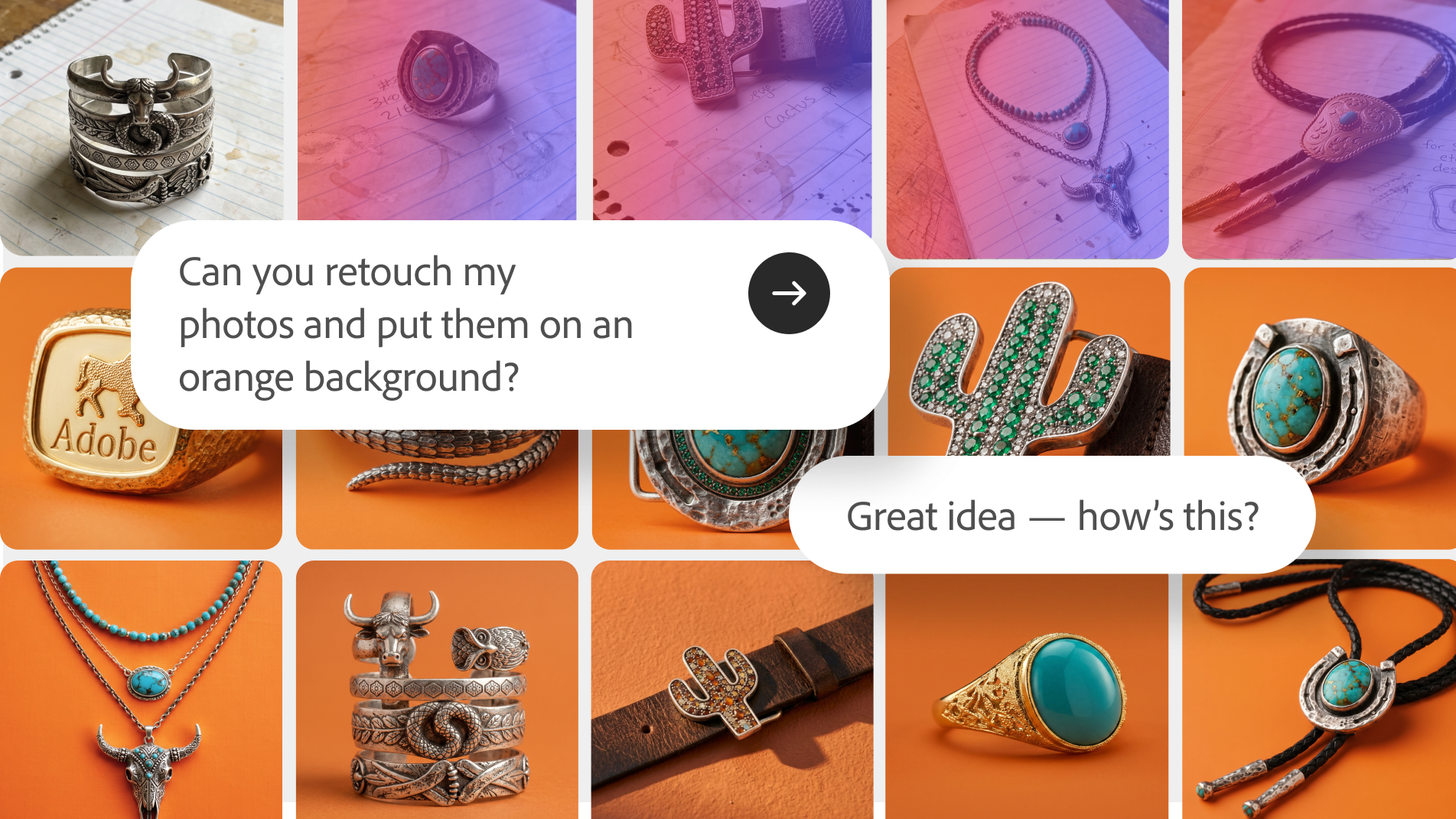
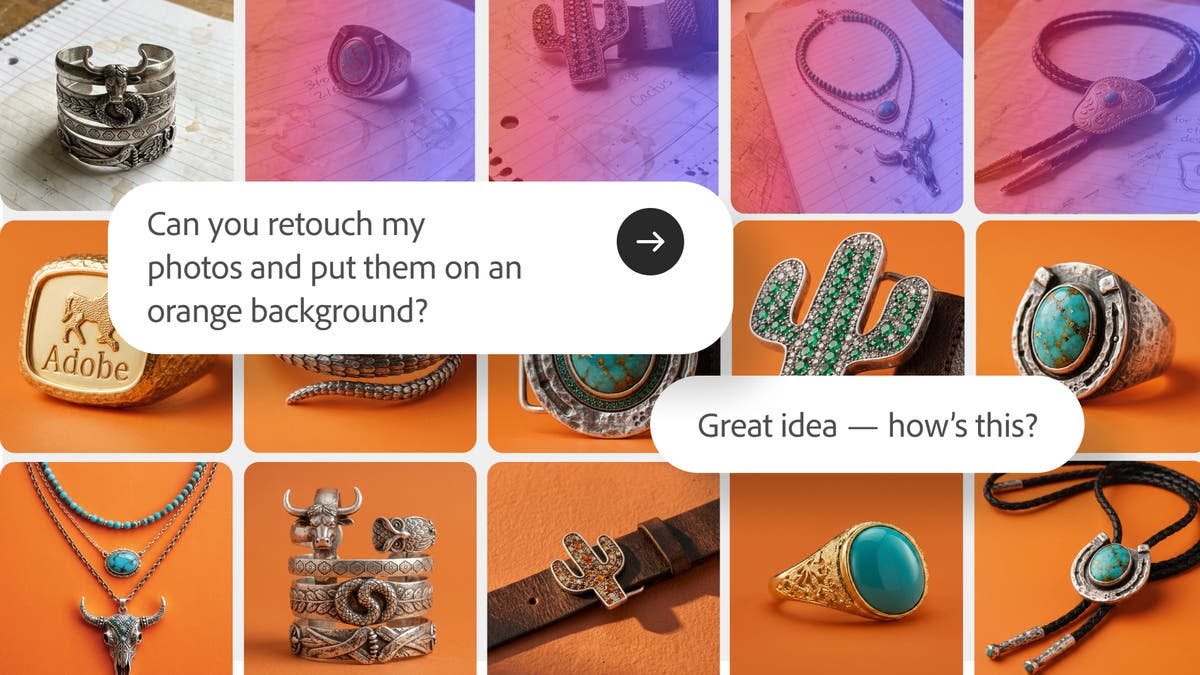
Adobe brought its creative agent into public beta across Premiere, Photoshop, Illustrator, InDesign, and Frame.io, plus new Firefly skills: describe a brand and get a full logo and palette, turn product photos into short-form video, generate storyboards then generate video from them.
I want to be measured here, because the demo energy is high and my skepticism is higher. A lot of this is the “describe it and it appears” loop we’ve seen for a while, now wearing nicer clothes. The brand-kit-from-a-sentence feature in particular makes me wince, because brand is the part of design that should not come from a sentence.
But two things are genuinely new and worth your attention. First, the agent lives inside the pro tools now, not in a separate playground, which means it enters the actual craft workflow instead of replacing it. Second, the “Elements” and “Projects” features — persistent characters, locations, reusable context across sessions — are Adobe finally treating continuity as a first-class problem. That’s the unsexy infrastructure work that decides whether generative tools become real production pipelines or stay demo toys. The flashy part underwhelmed me. The plumbing didn’t.
Figma’s design agent can now see the live web
Figma turned on web search inside its design agent on June 18. Prompt “search the web” and the agent pulls in live context and populates your design with real-world content instead of lorem ipsum and gray boxes. Alongside it, the Figma MCP server got fatter — Slides support, uploaded-font rendering, downloadable assets, Xcode compatibility.
This is the smallest-sounding item and the one closest to how designers actually spend their day. Placeholder content is a lie we’ve all designed against forever. A layout that looks great with “John Smith” and a tidy 40-character headline falls apart the second real data hits it. An agent that fills your frames with real, current content is a quiet upgrade to design honesty.
The MCP expansion matters more than the headline though. Figma steadily becoming a context source that external agents read from and write to is the design-systems-for-AI story playing out in real time. Your design system stops being a library humans browse and becomes an API agents consume. If you own a design system, that reframing should be on your roadmap, not your someday list.
The grown-up question: who governs the agents?
While everyone shipped autonomy, Thoughtworks shipped the hangover cure. Agent/works, launched June 16, is a control plane and governed runtime for enterprise AI agents — a single source of truth for every agent running across your clouds, with permissions scoped for agents rather than borrowed from humans.
The numbers in the announcement are the real story. Per Sonar’s 2026 developer survey, 42% of committed code is now AI-generated or AI-assisted. Per AppSec research they cite, 25% of AI-generated code samples contained critical security vulnerabilities. Sit with that combination. Nearly half your code is being written by something, and a quarter of what it writes has a serious hole in it.
This is the part the feature launches don’t put on the slide. Every autonomous capability shipped this week is also a new attack surface, a new compliance question, a new line item of spend you can’t see. “Costume change is not cognition,” as someone smart put it this week (more on that below). I’d add: capability without governance is just liability with better marketing. The teams that win the next year aren’t the ones who adopt agents fastest. They’re the ones who can prove what an agent is allowed to do before it does it.
Spatial gets its own thesis at AWE
AWE USA 2026 opened June 16 under the theme “I, Spatial: Humans Empowered by Spatial AI” — 5,000 people, 250 exhibitors, the whole XR ecosystem in one hall. The one I keep thinking about: Allsides showed a NVIDIA-powered digital-twin pipeline where Zalando captures footwear as photoreal 3D assets in roughly seven-minute automated scans, cutting per-scan cost by up to 92% and going scan-to-storefront in 48 hours.
This is the spatial story I care about, because it isn’t about headsets. It’s about the boring, beautiful economics of turning physical things into trustworthy digital twins at scale. Seven minutes and a 92% cost cut is the difference between “digital twins are a cool R&D demo” and “digital twins are how the catalog works now.” For anyone doing serious spatial and twin work, that curve is the one to watch — not the next pair of glasses, but the collapsing cost of capture. Spatial AI gets real when making the twin costs less than photographing the object.
The deeper read: stop building a monoculture of minds
The piece worth your weekend is Mark Purdy in HBR, “The Strongest Teams of AI Agents Will Be Built Using Different Models” (June 18). His argument: as agents become coworkers, the danger isn’t that they’re too autonomous, it’s that they all think alike. Most enterprises run the same handful of foundation models on the same retrieval architectures over the same data. The line I can’t shake, from Ciklum’s Enver Cetin: “Costume change is not cognition.” Give your agents different personalities all you want — if they share a brain, you’ve built a confident monoculture.
The research he cites is striking. Diverse agent teams were 25% better at resolving software-engineering problems; just two diverse agents could match or exceed 16 homogeneous ones. The risk if you don’t: correlated errors. In a regulated industry, everyone running the same model means everyone misses the same fraud at the same moment. That’s not vendor risk, that’s systemic risk.
For a design leader this lands hard, because diversity of perspective is something our discipline already understands in human terms. We’ve spent years arguing that homogeneous teams design worse products. Purdy is just saying the same thing about your agents. Orchestrating AI isn’t picking the best model. It’s composing an ensemble that disagrees in useful ways.
The shift underneath
Here’s the idea I’d defend in a talk. For two years we designed the human-AI relationship as a conversation — me and my copilot, turn by turn, my hand on the wheel. This week that metaphor quietly broke. Agents now act on triggers, live inside our tools, fill our designs with real content, write half our code, and increasingly need governing the way employees do. The interface is no longer a chat box. The interface is an org chart.
That reframes the design job. The valuable skill stops being “prompt the model well” and becomes “design the system of agents, guardrails, handoffs, and accountability that lets autonomous work happen safely and with a point of view.” Less interaction design, more institution design. The designers who matter next won’t be the ones with the best prompts. They’ll be the ones who can answer the question Thoughtworks is built around and HBR is circling: what has to be true for this thing to act on its own — and who’s responsible when it does?
The agents moved into the building this week. Somebody has to design how they’re supposed to behave once they’re inside.
Cover image prompt
Editorial conceptual illustration, 16:9. An empty modern open-plan design studio at dusk, warm low light. The desks, monitors, and chairs are occupied not by people but by softly glowing geometric “presences” — translucent abstract forms made of fine wireframe and gradient light, each subtly different in shape and color to suggest distinct individual minds rather than copies. One form is opening a glowing document, another sketching on a luminous canvas, another at a whiteboard. Muted sophisticated palette: deep slate blue, warm amber accents, soft coral, paper white. Cinematic depth of field, clean negative space, restrained and intelligent mood — the feeling of a workplace that quietly filled up overnight. No literal robots, no brains, no circuit-board clichés. Style: high-end editorial magazine illustration meets architectural rendering. --ar 16:9
Embedded images
All URLs verified live (HTTP 200, image content-type) at build time.
Cursor 3.8 Automations — https://ptht05hbb1ssoooe.public.blob.vercel-storage.com/assets/changelog/opengraph-changelog-06-18-26.png
Adobe Firefly — https://blog.adobe.com/en/publish/2026/06/18/media_1fca59f96354393cc571eab2405d23209f6b9b502.png
Figma design agent — https://cdn.sanity.io/images/599r6htc/regionalized/342e17642c7afa81206490b0dd21c3e5724ae040-2400x1260.png
Thoughtworks Agent/works — https://mmx.prnewswire.com/media/MS1866415/Thoughtworks-agentworks.jpg
AWE USA 2026 — https://www.awexr.com/assets/splash-for-socials-f48ae42fd6c29234fef1eb8cce211920aed7c229e0b22ebf920aab9bfbe90c88.png
HBR (deeper read) — no separate embed used in body.